Appearance
Tutorial 5 - Energy Resiliency in a Business Context
This tutorial explores energy resiliency as a strategic business consideration, moving beyond simple cost optimisation to examine how energy security affects business continuity, risk management, and long-term competitiveness. Understanding resiliency in business terms enables more comprehensive energy planning that protects operations while creating value.
Resiliency
What is it?
Energy resiliency encompasses the ability to maintain operations during grid disruptions and the capacity to recover quickly from energy supply interruptions. This means maintaining critical functions with backup power systems while adapting to changing energy supply conditions. Resiliency goes beyond simple backup power to establish comprehensive energy systems that provide operational independence during outages and optimal grid integration during stable periods.
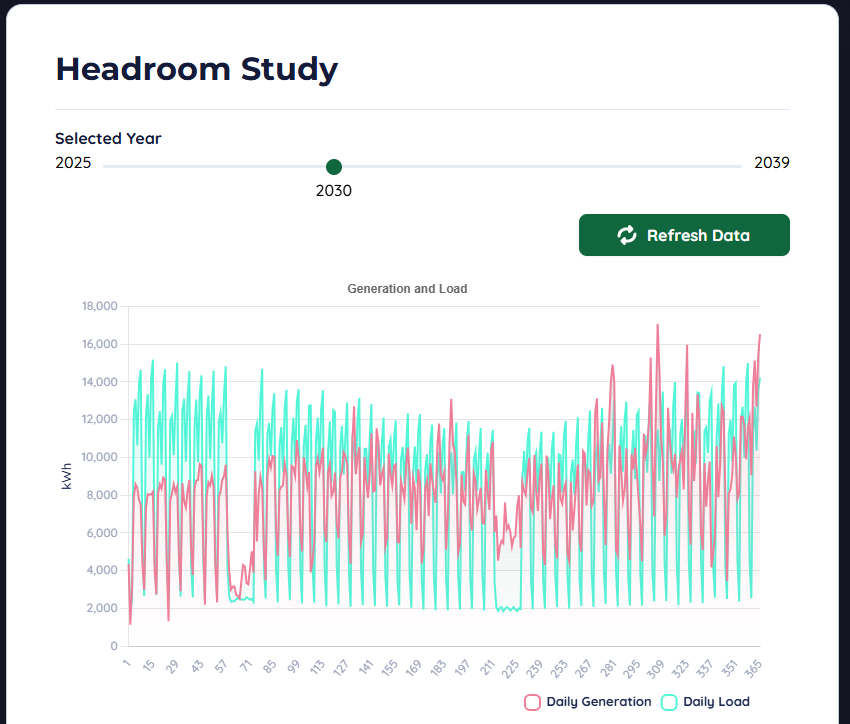
In Encast, resiliency can be modelled through the headroom analysis tool, which shows whether your system can operate independently of the grid. The "Island Mode" check indicates whether onsite generation can meet all electrical demands without grid support.
Necessity
Business Interruption
The cost of lost production during outages extends far beyond the immediate loss of power. Impact on customer service and reputation can have lasting effects on business relationships and market position. Employee safety and welfare considerations become critical during extended outages, while data loss and system recovery costs can compound the immediate disruption impact.
Modern businesses depend heavily on continuous power supply for everything from manufacturing processes to data centres. Even brief interruptions can cascade into significant operational and financial impacts.
Financial Exposure
Direct revenue loss during downtime represents only the most visible cost of energy disruption. Penalties for missed delivery commitments can exceed the immediate lost production value. Insurance implications and coverage gaps often leave businesses more exposed than expected. The cost of emergency power procurement during extended outages can be extraordinarily high, particularly during widespread disruptions when demand for backup power equipment peaks.
Use Encast's profit and loss modelling to quantify these costs. Create entries for lost production, penalty payments, and emergency power costs to understand your total exposure.
Sovereignty
Energy Independence and Security
Reducing dependence on external energy suppliers provides strategic control over operations and costs. Creating local energy generation capabilities through solar, wind, or other onsite resources reduces vulnerability to supply disruptions. Managing supply chain risks for fuel and equipment ensures continued operation even during wider disruptions. Strategic control over energy costs and availability enables better long-term planning and budgeting.
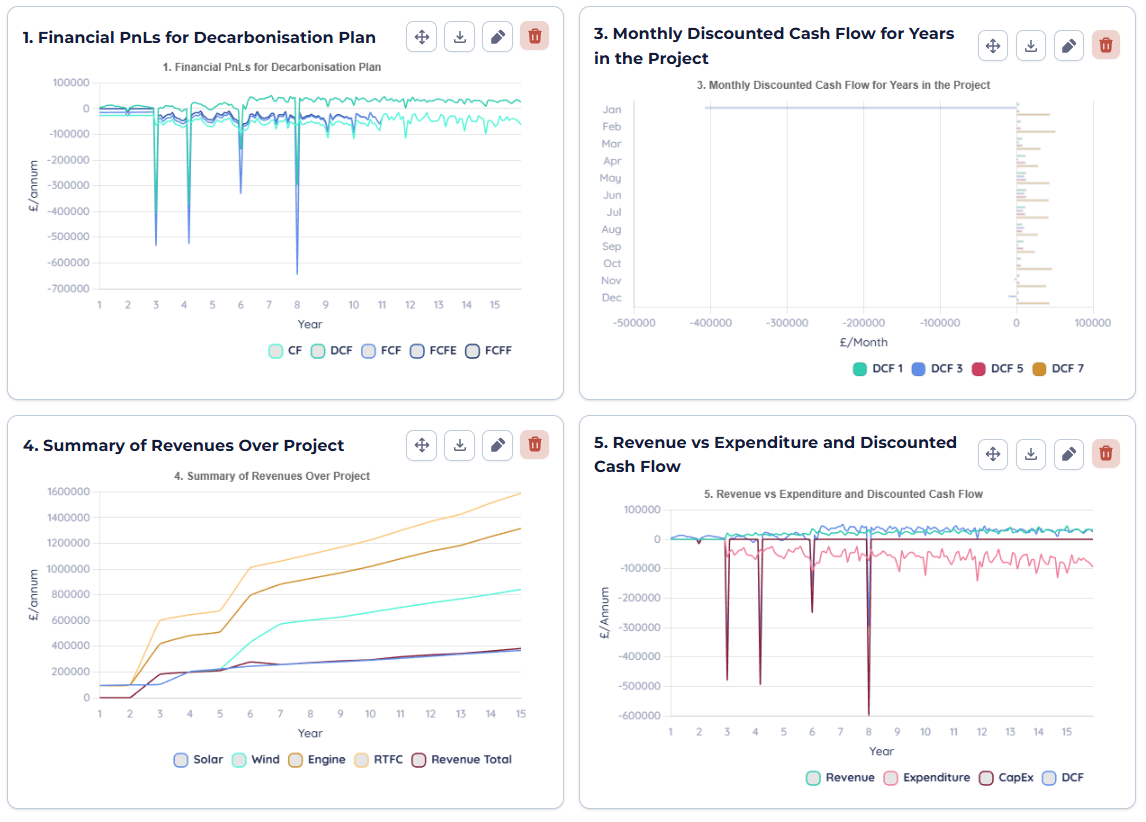
Model different levels of energy independence using multiple scenarios in Encast. Compare fully grid-dependent operations against various levels of onsite generation and storage.
Risk Mitigation Strategies
Diversifying energy sources and suppliers reduces single points of failure in your energy supply chain. Creating redundancy in critical systems ensures continued operation even when primary systems fail. Establishing energy storage capabilities provides buffer capacity during supply interruptions. Developing operational contingency plans ensures your organisation knows how to respond effectively when disruptions occur.
Financial Savings and Managing Risk
Direct Cost Reductions
Avoiding premium rates during peak demand periods can provide significant savings for businesses with flexible operations. Reducing demand charges through load management strategies addresses one of the highest cost components for many commercial operations. Capitalising on time-of-use tariff structures by shifting loads to lower-cost periods creates ongoing savings. Minimising standby charges and connection fees through right-sized connections and power factor management reduces fixed costs.
Use Encast's detail view to identify peak demand periods and model load-shifting strategies. Battery storage and demand response programs can significantly reduce peak charges.
Risk Management Benefits
Hedging against future energy price volatility provides budget certainty and protection against market fluctuations. Insurance against supply disruption costs protects against the cascading effects of outages. Protection against regulatory changes ensures compliance costs don't create unexpected financial impacts. Creating predictable energy cost structures enables better financial planning and reduces operational uncertainty.
Levelised Cost
Understanding it as a Metric
Levelised cost provides a methodology for comparing different energy solutions on equal terms by including all lifecycle costs in analysis. Understanding discount rates and time value of money ensures accurate financial comparisons. Incorporating reliability and availability factors capture the true value proposition of different energy systems. This metric enables comparing options with different cost structures, lifespans, and reliability characteristics.
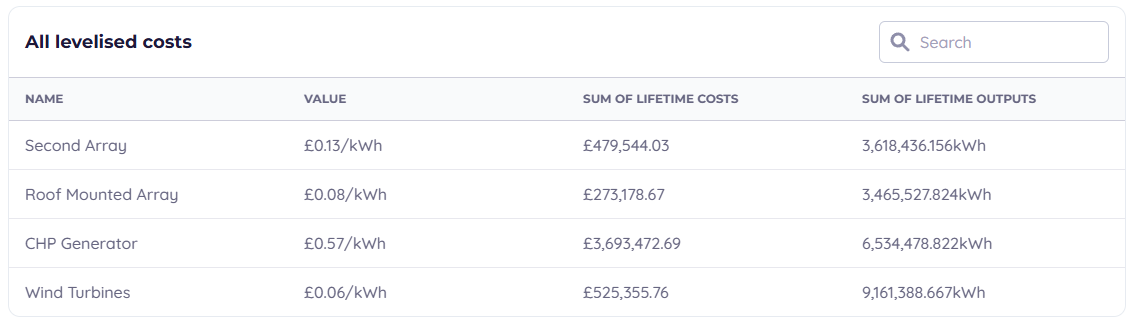
Encast's financial reporting includes net present value calculations that incorporate these factors. Use the discount rate settings to reflect your organisation's cost of capital.
Reevaluating Energy as an Operational Cost
Moving from commodity expense to strategic investment requires understanding the total cost of ownership for energy systems. Factoring in hidden costs of energy disruption reveals the true cost of unreliable power supply. Evaluating energy investments against other business priorities ensures optimal allocation of capital resources.
Creating business cases that include resilience benefits captures value that traditional cost-benefit analyses miss. Quantifying the value of energy security and independence requires looking beyond simple energy costs to consider business continuity, risk mitigation, and strategic advantages.
Modelling Resiliency in Encast
Backup Power Analysis
Configure generator and battery systems to provide backup power during grid outages. Use the operational criteria features to define when backup systems should activate and how they should operate during different types of disruptions.
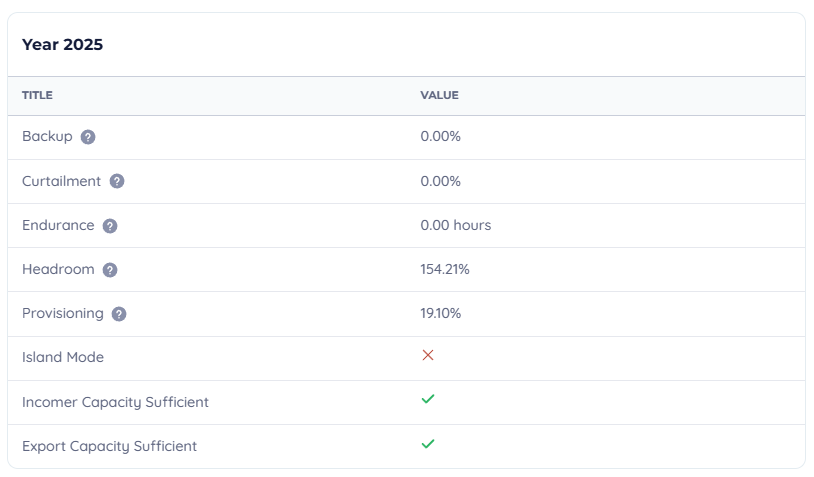
The "Backup" percentage in headroom analysis shows what proportion of maximum demand can be met by onsite backup systems. Values over 100% indicate full backup capability.
Endurance Planning
Battery endurance indicates how long backup systems can sustain critical loads without grid power or onsite generation. This metric helps size storage systems appropriately for your risk tolerance and operational requirements.
Scenario Modelling
Create multiple scenarios to model different resiliency strategies. Compare grid-tied only operations against various levels of backup power, energy storage, and onsite generation. Use the financial analysis to quantify the value of different resiliency investments.
Implementation Strategies
Phased Approach
Start with critical load identification and basic backup power systems. Gradually expand to include energy storage and onsite generation as business cases justify investment. Use Encast's multi-year modelling to plan phased implementation strategies.
Integration Considerations
Ensure backup systems integrate properly with existing electrical infrastructure. Consider power quality, switching systems, and control interfaces when designing resiliency solutions. Model these considerations using Encast's operational criteria and timing features.
Conclusion
Energy resiliency represents a fundamental shift from viewing energy as a simple operational expense to understanding it as a strategic business capability. By quantifying the costs of disruption, the benefits of independence, and the value of reliable operations, businesses can make informed decisions about resiliency investments.
The tools in Encast enable comprehensive analysis of resiliency strategies, from basic backup power to complete energy independence. By modelling different scenarios and understanding their financial implications, you can develop resiliency strategies that protect operations while creating long-term value.
Energy resiliency fundamentally involves developing adaptable power systems that ensure operational continuity, minimise business risks, and create competitive advantages amid growing energy market volatility. The investment in energy resiliency pays dividends not just during disruptions, but through reduced risk, improved operational flexibility, and enhanced competitive position.
Start by understanding your critical loads and disruption costs, then build resiliency solutions that match your risk tolerance and business objectives. Use the analytical capabilities in Encast to quantify both the costs and benefits of different approaches, enabling confident decision-making about your energy future.